Every human is held to a certain standard to do the "right" thing in all situations, but what is the so called, "right" thing to do? In the film, Do the Right Thing, written by Spike Lee, the characters are faced with controversial situations that leave the audience questioning if they are doing the "right" thing.
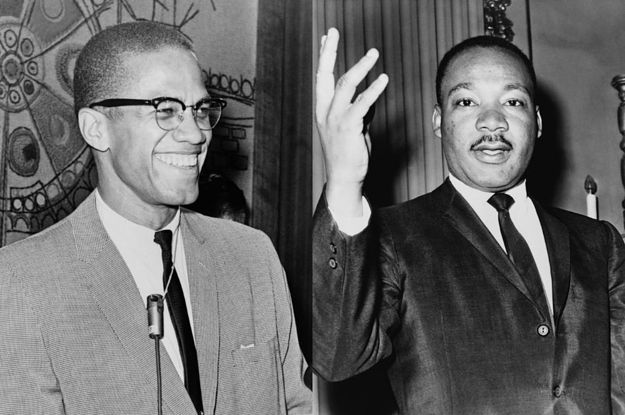
The film ends with two controversial quotes, one about love, by Martin Luther King, Jr. and the other about hate, by Malcolm X, love and hate being a binary motifs throughout the script.
In the script, Radio Raheem explains to Mookie what his four finger rings stand for. Radio Raheem says, "one hand is always fighting the other" (p. 45). There is never going to be a time where one individual or group of people are at peace and have nothing to complain about. Radio Raheem continues his explanation with the statement "..if I love you I love you, if I hate you..." (p. 46). Radio Raheem basically is stating he does not tolerate people, he either is all for someone, or all against them. But when is it acceptable to show different levels of love and hate? The characters in Do The Right Thing experience these situations within each encounter they have with another individual.
"...I have to preserve the right to do what is necessary to bring an end to that situation, and it doesn't mean that I advocate violence, but at the same time I am not against using violence in self-defense. I don't even call it violence when it is self-defense, I call it intelligence" - Malcolm XThe quote by Malcolm X is displayed at the end of the film, after the violence and riot acts of the citizens of Brooklyn. The citizens of a majority black community, Brownstone, were raging with anger when Radio Raheem was killed in police custody. The community felt that the only way to get back and get their point across was by violence. The only way to protect themselves, defend themselves was with violence. The people of color living in this Brooklyn community wanted to end the situation, they are sick of seeing their own community being singled out, targeted, and murdered.Though this was not necessarily the "right" way to react to the death of a well known neighborhood friend, it is what the characters in Do the Right Thing believed was the correct thing to do.

Each person has a different idea of the "right" way to act, or what to do in a situation based on their individual beliefs and morals. Though one may believe what they are doing is the proper way to respond to a situation, the next person may think differently. To Malcom X, he believed violence as self-defense was the correct way to approach a situation that he wanted to put to an end, to Martin Luther King Jr, it was not the "right" thing to do since he believed "violence is immoral".


Kacie, your blog is visually appealing and stimulating. Your writing shows that you understand how the quotes relate to the film.
ReplyDeleteWell done!
May I use this as a sample in Tuesday's class?
--Prof. Young